Gianluca Bini, DVM MRCVS DACVAA
Age alone does not define anesthetic risk in puppies and kittens, and two patients of the same weight may need very different anesthetic plans.
Puppies and kittens have less cardiovascular and respiratory reserve than adult dogs and cats. The differences are greatest during the first weeks of life. A nursing puppy depends on frequent meals and an external source of warmth. By weaning, a healthy puppy is better able to maintain blood glucose and body temperature, although its small size still favors rapid heat loss under anesthesia. Age, weaning status, current weight, and recent food intake are therefore useful starting points for the preanesthetic assessment.
Pediatric Physiology
Cardiovascular function. The neonatal myocardium has limited capacity to increase stroke volume. A decrease in heart rate can therefore produce a substantial decrease in cardiac output. Bradycardia is particularly important when accompanied by weak pulses or a fall in arterial pressure. Record the heart rate and pulse quality before premedication. An adult reference range is of little help when interpreting a rate that has fallen considerably from the puppy’s baseline.
Respiratory function. Oxygen consumption per kilogram is high in young animals. The chest wall is compliant, and the volume of gas remaining in the lungs at the end of expiration is small. During apnea, the oxygen available in the lungs is quickly depleted. This is especially relevant during induction, when respiratory depression may coincide with difficulty visualizing a small larynx. Preoxygenation and the ability to provide assisted ventilation are important even for a short procedure.
Hepatic and renal function. Hepatic enzyme activity, glomerular filtration, and tubular function are immature in neonates. Drugs that depend on these pathways for elimination may have a prolonged effect, particularly after repeated administration. Lower plasma albumin can increase the unbound fraction of highly protein-bound drugs. Young patients also have a greater proportion of body water and relatively little fat, both of which affect drug distribution. The clinical response to an initial dose should guide subsequent administration.
Glucose and temperature regulation. Limited glycogen stores make a sick or poorly nourished neonate vulnerable to hypoglycemia when nursing is interrupted. Heat loss is also rapid because of the large surface area relative to body mass, little subcutaneous fat, and immature thermoregulation. A cold patient may be lethargic on admission and slow to recover after anesthesia. Measure temperature and glucose in a weak puppy or kitten before giving sedatives. Either abnormality can be missed on observation alone.
Preanesthetic assessment and fasting
Obtain a weight on a scale suitable for small patients and record it in kilograms. Ask about weight gain, feeding frequency, and the last observed meal. When littermates share a bowl, the time food was removed may bear little relation to the time the patient last ate. For a bottle-fed neonate, the amount taken at the last several feeds is useful. A puppy that has progressively lost interest in feeding warrants further assessment before elective anesthesia.
Observe respiratory rate and effort before handling. Assess mentation, body condition, hydration, mucous membrane color, pulse quality, heart rate and rhythm, and temperature. A murmur in a patient with poor growth or abnormal breathing warrants investigation. Coughing with feeds or a history of regurgitation should prompt assessment for aspiration and may change the airway plan. In a puppy with vomiting or diarrhea, dehydration and electrolyte disturbances may require treatment before induction.
Packed cell volume, total protein, and blood glucose can be measured with a small sample. Add renal values, electrolytes, or other tests according to the history, examination, and anticipated procedure. Use age-appropriate reference intervals. In a very small animal, account for blood drawn for repeat testing as well as blood lost during surgery. If an urgent procedure must proceed during stabilization, establish which abnormalities will need reassessment after induction.
Suckling neonates should generally continue nursing until separation for the procedure. For patients younger than eight weeks or weighing less than 2 kg, AAHA recommends withholding food for no longer than one to two hours, allowing water, and scheduling the first procedure of the day. A 10-week-old kitten weighing 1.1 kg still meets the weight criterion. Give the caregiver a feeding time based on the anticipated induction time and confirm intake on arrival. Reassess the plan if the procedure is delayed or the patient regurgitates.
Healthy, weaned kittens tolerate fasting better than compromised neonates. In a prospective study of 75 kittens aged eight to 16 weeks undergoing elective gonadectomy, none had a preoperative glucose below 60 mg/dL after an overnight fast. Immediately after surgery, 44% were hyperglycemic. Glucose was measured at those two time points. These findings are relevant when deciding whether a healthy kitten needs supplemental dextrose. They provide little information about a sick neonate or a patient undergoing prolonged anesthesia.
On admission, record the time of the last feed separately from the time anesthesia is scheduled. If an emergency displaces the first case, repeat the glucose measurement in a small patient with marginal intake and decide whether feeding can resume while the patient waits. After feeding, revise the induction time and tell the person overseeing the surgical list. This is particularly important in a recently weaned kitten that ate only a small portion of the meal offered at home.
Premedication and analgesia
Provide analgesia before a painful procedure. Opioids are useful in pediatric patients because they provide analgesia, reduce anesthetic requirements, and can be reversed if necessary. Select the opioid according to the expected intensity and duration of pain. A full mu agonist is generally appropriate for a laparotomy. Butorphanol provides sedation, but its analgesia is limited for major surgery. Following opioid administration, assess heart rate and ventilation before administering additional sedatives or the induction agent.
Midazolam or diazepam can provide useful sedation and muscle relaxation in a neonate with relatively little cardiovascular depression. Benzodiazepines have no analgesic effect and should be paired with an analgesic for a painful procedure. Acepromazine has a prolonged duration of action, causes vasodilation, and has no specific antagonist. These properties limit its usefulness in a hypovolemic or otherwise compromised patient. Alpha-2 agonists increase afterload and decrease heart rate, effects that may be poorly tolerated by a neonate with limited cardiac reserve.
Local and regional techniques reduce nociceptive input during surgery and can provide analgesia during recovery. Calculate the total local anesthetic dose in milligrams before drawing up the volume. Include all sites and routes of administration. For example, a kitten may receive topical lidocaine for intubation before the surgeon performs an incisional block. Both clinicians should know the drug, concentration, and amount already administered.
NSAID selection depends on species, age, renal function, hydration, and perioperative perfusion. Check the labeling for the specific product. In a dehydrated neonate, analgesia can be provided with an opioid and a local or regional technique while fluid deficits and perfusion are addressed. Record when postoperative analgesia will next be assessed, particularly if a single injection or block is expected to wear off after transfer to the ward.
Induction and airway management
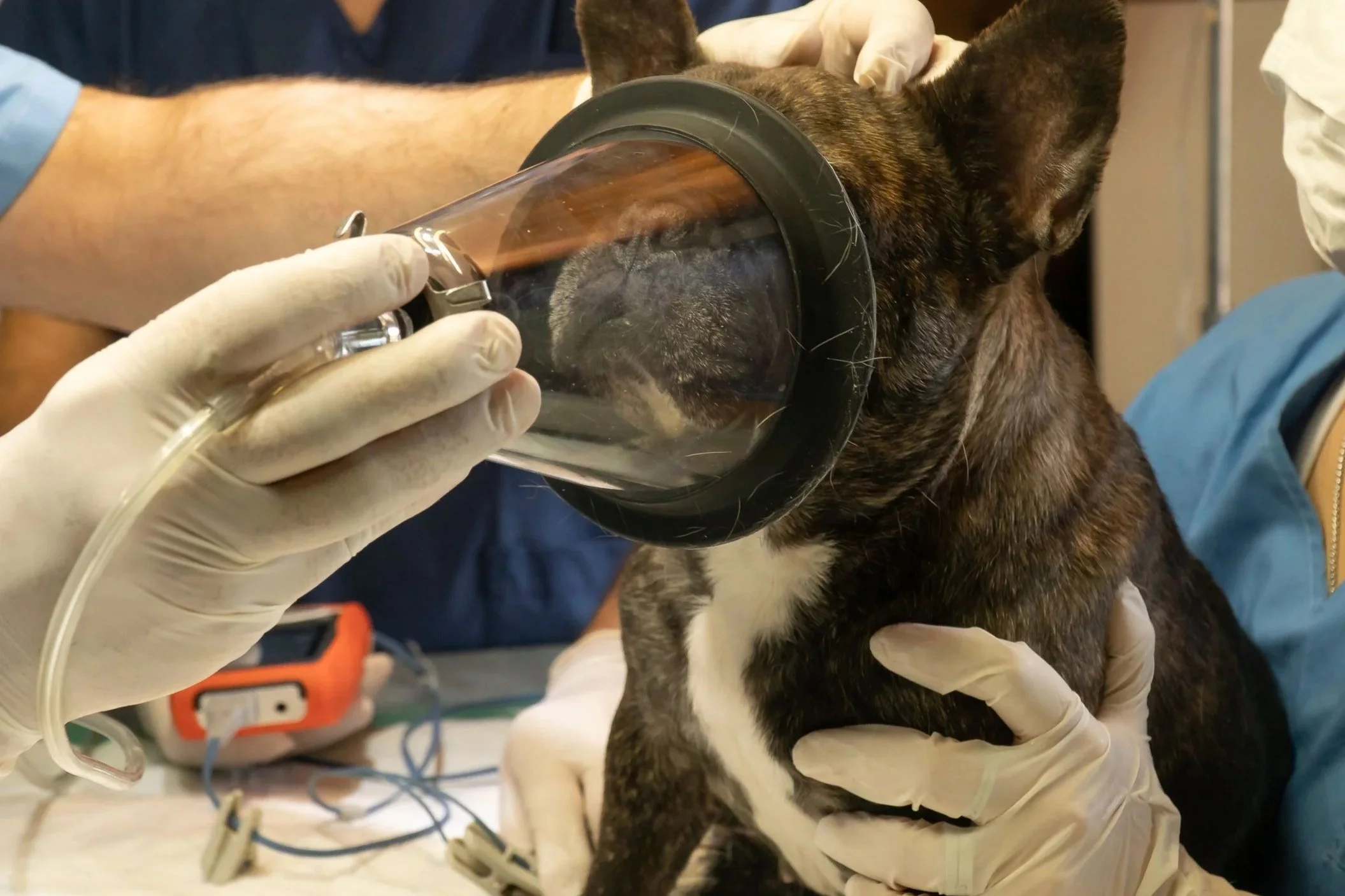
Prepare the airway equipment before sedation. Check the light on the laryngoscope, lay out several adjacent sizes of endotracheal tube, and select a mask that fits the muzzle. Check oxygen delivery, the breathing circuit, and the equipment for assisted ventilation. A small tube can be displaced by the weight of the circuit or advanced too far when the head and neck are repositioned. Support the tubing and leave the connection accessible after draping.
Establish IV access before induction when feasible. Small calculated doses may be difficult to measure accurately with the stock concentration. Select an appropriate syringe, label any dilution with its final concentration, and verify the volume to be administered. The extension set also matters. A drug injected into a port some distance from the patient can remain in the line. If more drug is given before the first dose reaches the circulation, the next flush may deliver both doses together.
Preoxygenate as tolerated with gentle restraint. Propofol and alfaxalone can be administered IV in increments until depth is sufficient for intubation. Allow time to observe the effect of each increment, particularly in a patient that is already well sedated. Be prepared to ventilate if apnea occurs. Ketamine combined with a benzodiazepine is another induction option, although recovery may be prolonged in a very young patient with immature drug clearance.
Kittens are susceptible to laryngospasm. Obtain a clear view of the larynx and avoid repeated contact with the arytenoids. If the glottis closes, stop the attempt, supply oxygen, and reassess anesthetic depth. When topical lidocaine is used, allow approximately 60–90 seconds for it to take effect before attempting intubation again. Confirm tube placement by direct visualization and a sustained expiratory carbon dioxide waveform. Check bilateral breath sounds and tube depth after any change in position.
Maintenance and physiologic support
Inhalant anesthesia can be used for maintenance. Opioids and local or regional blocks help limit the inhalant concentration required during surgical stimulation. If blood pressure decreases shortly after the vaporizer setting is increased, assess anesthetic depth and analgesia. Increasing inhalant to control movement during a painful part of the procedure may worsen hypotension. Discuss the timing of stimulation with the surgeon so additional analgesia can be given before it is needed.
A dedicated anesthetist should monitor circulation, oxygenation, ventilation, temperature, and anesthetic depth throughout the procedure. Follow the ECG with pulse palpation or Doppler assessment, and use a blood pressure cuff appropriate for the limb. If the ECG rate and peripheral pulse rate differ, auscultate the heart and assess pulse quality. If an oscillometric monitor repeatedly fails to return a value, check cuff size and placement and obtain a Doppler measurement when available. Document the method and site with the reading.
Monitor respiratory effort and waveform capnography alongside pulse oximetry. Supplemental oxygen can maintain saturation for a period despite inadequate ventilation. A rising end-tidal carbon dioxide concentration with shallow breaths warrants assessment of depth, ventilation, and the breathing system. Excess apparatus dead space can contribute to rebreathing in a patient with a very small tidal volume. Use a low-dead-space adapter and remove unnecessary connectors between the tube and circuit. During assisted ventilation, observe chest excursion and monitor airway pressure with a manometer.
Loss of the capnogram immediately after moving the patient requires prompt attention. Look at the chest, feel for a pulse, and inspect the connection at the endotracheal tube. Check tube position, patency, and the sampling line. The tube can remain tied in place while the circuit has disconnected under the drapes. If breathing is absent or inadequate, provide ventilatory support while the cause is identified. Waiting for a change in pulse oximetry can delay recognition, particularly after preoxygenation.
A sudden decrease in heart rate during surgical traction may be vagally mediated. Ask the surgeon to release traction, assess pulses and blood pressure, and check oxygenation, ventilation, and depth. An anticholinergic such as atropine or glycopyrrolate may be indicated when bradycardia compromises perfusion. Continue to assess the patient after the rate improves. Persistent weak pulses or hypotension warrant evaluation for another cause, including hemorrhage or excessive anesthetic depth.
Fluid administration. Use a pump that delivers the prescribed volume accurately. Include fluid used for drug infusions and catheter flushes in the total. A 1-mL flush in a 500-gram kitten delivers 2 mL/kg. Three flushes during a short procedure add 6 mL/kg before maintenance fluids are counted. Record surgical losses in milliliters as well. The blood in a few small gauze sponges can be important in a patient of this size.
Treat hypovolemia when present and reassess after fluid administration. Immature kidneys limit the ability to excrete a fluid excess. In a patient with adequate circulating volume, persistent hypotension may require adjustment of inhalant depth or support of contractility or vascular tone. If hemorrhage is ongoing, alert the surgeon, pursue hemostasis, and assess the need for blood products. Pulse oximetry can remain normal in an anemic patient despite a reduction in the amount of oxygen carried in the blood.
Temperature. Begin warming before induction. Insulate the patient from cold surfaces, limit wetting during surgical preparation, and replace damp bedding. Continue warming during imaging and transfer, when a patient may spend considerable time away from the operating table. Use a temperature-controlled device with appropriate skin protection. Measure temperature during anesthesia and recovery, adjusting the intensity of warming as the temperature rises. Interpret the reading in relation to the patient’s age.
Blood glucose. AAHA recommends glucose monitoring before, during, and after induction in patients under eight weeks or under 2 kg. Subsequent checks depend on the initial value, duration of anesthesia, nutritional status, and clinical condition. Clinical signs of hypoglycemia can be obscured under anesthesia. If glucose is low, administer appropriately diluted IV dextrose according to the patient’s treatment plan and recheck the response. A patient requiring continued supplementation needs a prescribed concentration, infusion rate, and time for the next glucose measurement.
Recovery
Continue direct observation through extubation and early recovery. Assess airflow as well as chest movement. A kitten with upper airway obstruction may have marked inspiratory effort with little air movement. Keep oxygen and equipment for reintubation at hand, particularly after a difficult intubation. If recovery is prolonged, reassess ventilation, oxygenation, circulation, temperature, and glucose. Consider the timing and cumulative dose of sedatives and opioids. Hypothermia, hypoglycemia, and residual drug effects may occur together.
At transfer, report whether the patient still needs supplemental oxygen, active warming, or dextrose. Include the temperature trend and the time it was last measured. A kitten whose temperature is falling despite active warming needs closer observation than one maintaining the same temperature after the warmer has been turned down. When dextrose has been discontinued, communicate when glucose is due to be rechecked and whether the patient has eaten since the infusion stopped.
Assess posture, facial expression, response to handling, and ability to settle. A quiet kitten can still be painful. In a vocal puppy, consider pain, cold, and distress associated with separation. Reassess comfort after rescue analgesia and document the response. If opioid reversal was necessary because of respiratory depression, review analgesic coverage as soon as ventilation is adequate. Include the time of the last opioid or local block when transferring the patient to recovery personnel
Offer a small meal once the patient is alert, swallowing adequately, and able to eat after the procedure. Supervise reunion of nursing patients with the dam and observe a feed. Before discharge, confirm that the puppy or kitten is breathing comfortably, maintaining an age-appropriate temperature as warming is withdrawn, and receiving adequate analgesia. Record actual intake and the most recent glucose result when monitoring was indicated. Give the caregiver the timing of the next meal and analgesic dose, and instructions for persistent lethargy, refusal to feed, or increased respiratory effort.
Conclusion
Anesthetic planning for puppies and kittens begins with age, weaning status, and recent food intake.
In nursing neonates, limited oxygen reserves and a greater dependence on heart rate to maintain cardiac output make apnea and bradycardia especially important to recognize and treat promptly. Small body size also affects how much heat a patient loses and how much a single catheter flush contributes to the total fluid volume.
Monitoring should continue through recovery, with particular attention to airway patency, temperature, and blood glucose in patients at risk. Before discharge, confirm that the patient is comfortable, maintains an age-appropriate temperature, and can resume feeding safely.
References
Meyer RE. Anesthesia of Pediatric Small Animal Patients. In: Recent Advances in Veterinary Anesthesia and Analgesia: Companion Animals. International Veterinary Information Service. 2007. IVIS chapter. IVIS
Grubb T, Sager J, Gaynor JS, et al. 2020 AAHA Anesthesia and Monitoring Guidelines for Dogs and Cats. Journal of the American Animal Hospital Association. 2020;56(2):59-82. AAHA guidelines. pubmed.ncbi.nlm.nih.gov
Semick DN, Shaver SL, Cornell HN, et al. Perioperative blood glucose concentrations in kittens following overnight fasting and gonadectomy. Journal of Feline Medicine and Surgery. 2018;20(4):344-348. https://doi.org/10.1177/1098612X17710590. pubmed.ncbi.nlm.nih.gov
Robertson SA, Gogolski SM, Pascoe P, et al. AAFP Feline Anesthesia Guidelines. Journal of Feline Medicine and Surgery. 2018;20(7):602-634. https://doi.org/10.1177/1098612X18781391. pubmed.ncbi.nlm.nih.gov
Bailey K, Briley J, Duffee L, et al. The American College of Veterinary Anesthesia and Analgesia Small Animal Anesthesia and Sedation Monitoring Guidelines 2025. Veterinary Anaesthesia and Analgesia. 2025;52(4):377-385. https://doi.org/10.1016/j.vaa.2025.03.015. pubmed.ncbi.nlm.nih.gov
Pardo M, Spencer E, Odunayo A, et al. 2024 AAHA Fluid Therapy Guidelines for Dogs and Cats. Journal of the American Animal Hospital Association. 2024;60(4):131-163. https://doi.org/10.5326/JAAHA-MS-7444. pubmed.ncbi.nlm.nih.gov
Gruen ME, Lascelles BDX, Colleran E, et al. 2022 AAHA Pain Management Guidelines for Dogs and Cats. Journal of the American Animal Hospital Association. 2022;58(2):55-76. https://doi.org/10.5326/JAAHA-MS-7292.
Continue Reading